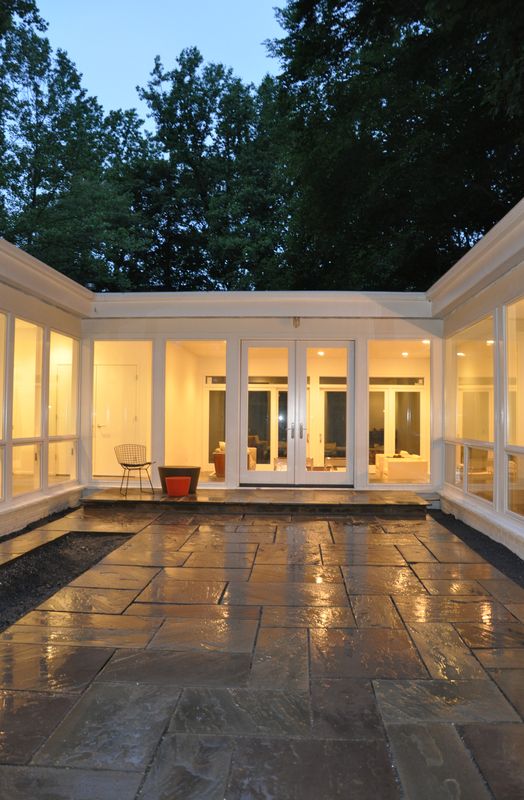
The layout was the problem, not the house. Now one continuous room.
It had to work for a single parent and two teenagers who could not share a bathroom, and it had to hold a home office. Nothing needed adding. Everything needed clearing.
The dining room had been closed off with a door to the kitchen and a door to the living room. The first floor was ceramic tile. The upstairs hallway was dark because the laundry room had taken its only window.
The bones were worth buying. The additions were worth removing.
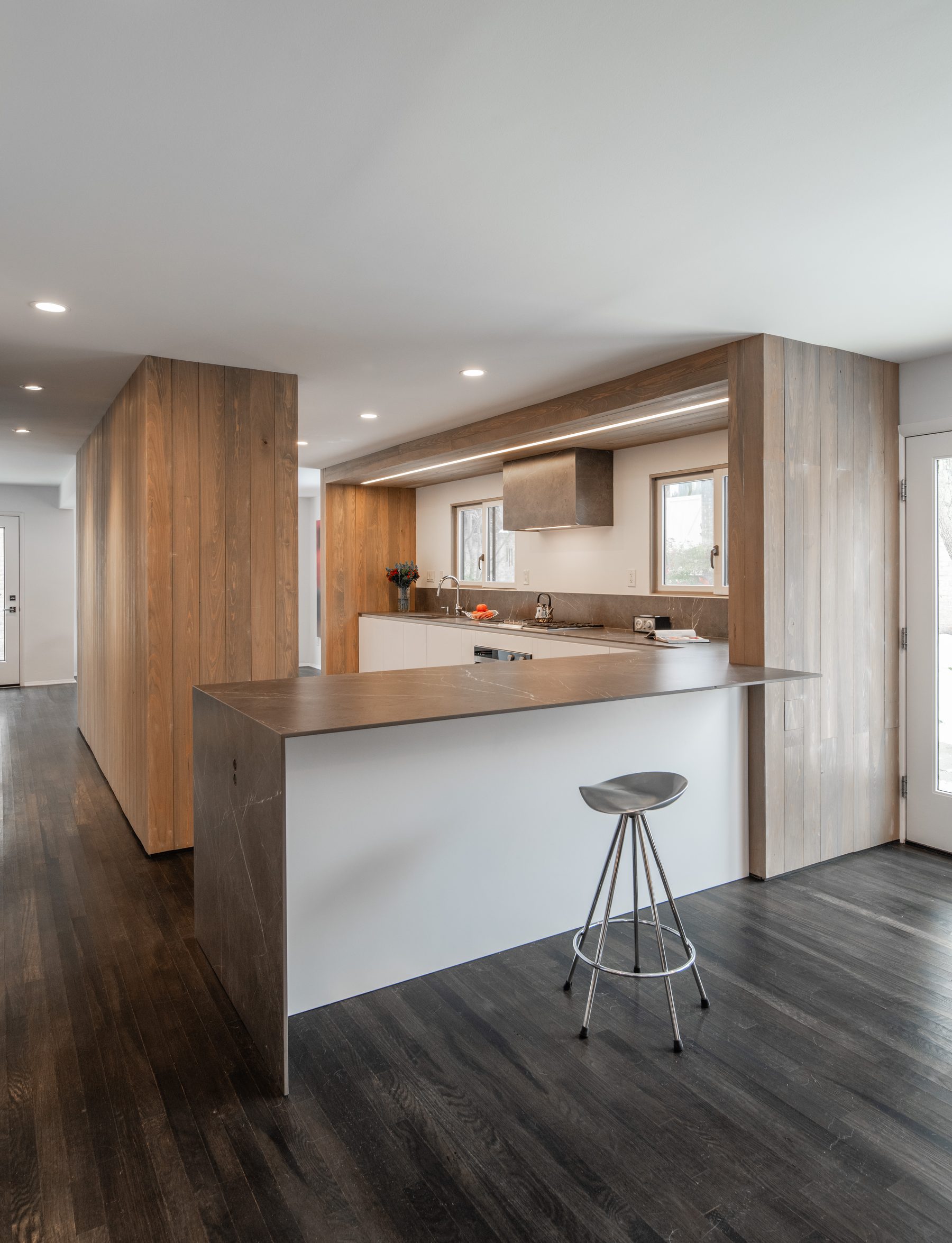
Entering, you meet a wood-clad wall and choose: right to the informal side, left to the formal. The bar holds the coffee station, pantry and refrigerator, and separates without closing anything off.
The wood wraps twice. In plan, around the storage. In section and elevation, along the sink wall and out to the exterior. Together they make the kitchen read as an object floating in the room, and the thick clad wall hides the plumbing stack.
And two reading nooks beside the fireplace, fitted with stock cabinets, that became the best seats in the house.
The peninsula drops to keep the view continuous from the den through the kitchen and dining room to the garden. Two teenagers have their own bathrooms. The laundry moved into the corridor behind sliding doors, which freed the space for the second bath and let daylight reach the upstairs hall.
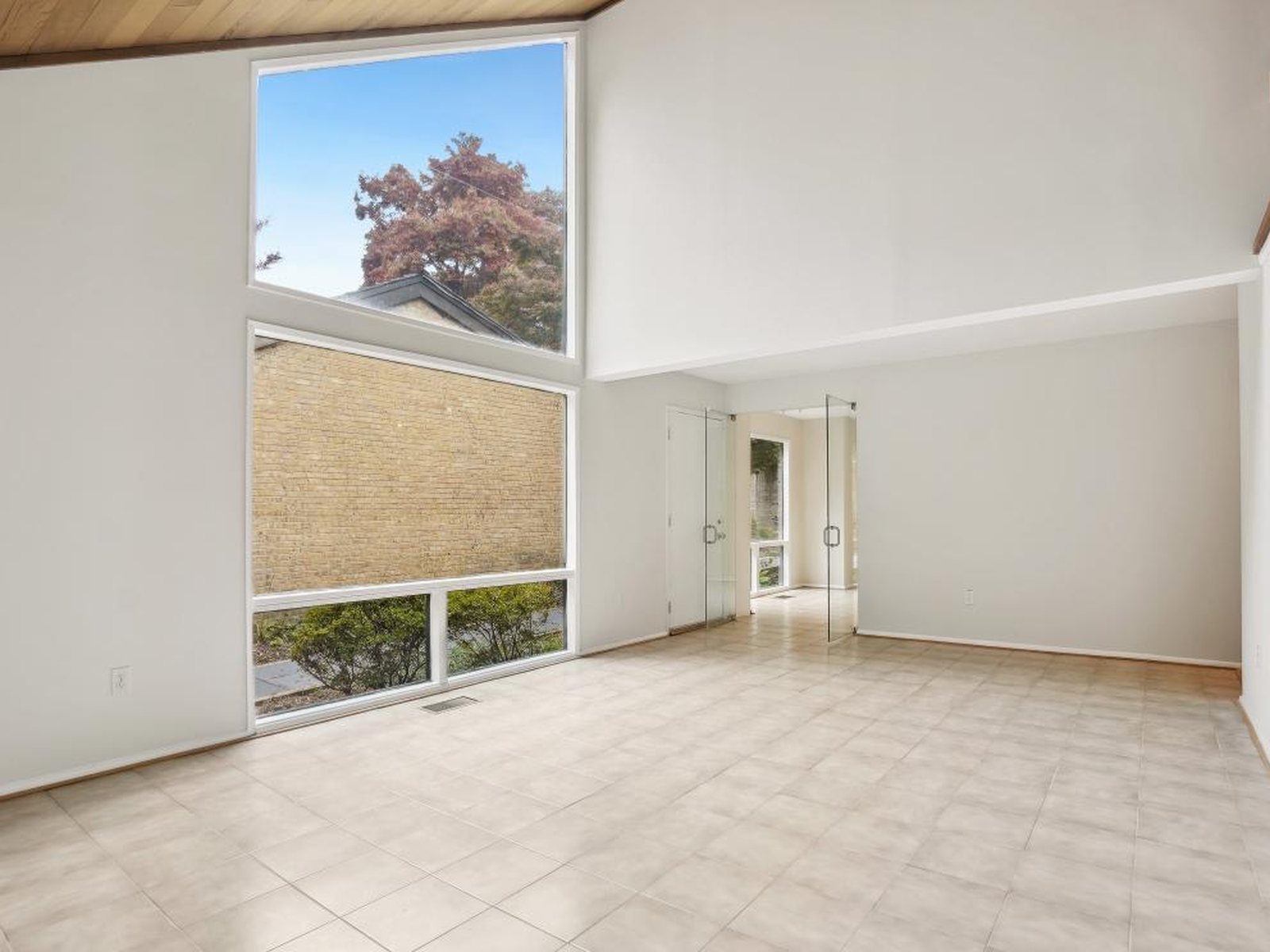
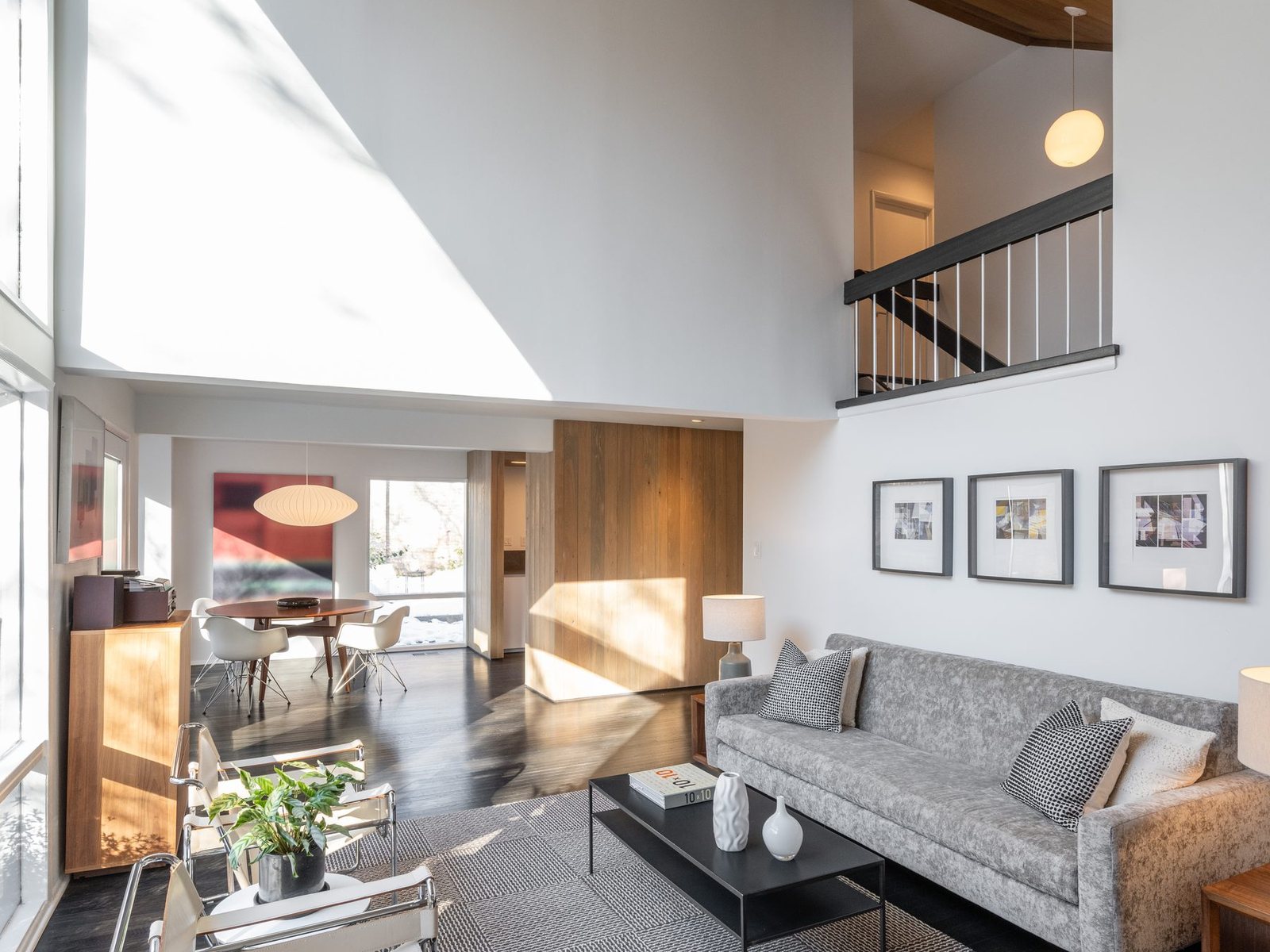
Ceramic tile across the whole first floor. Now one wood floor, running through.
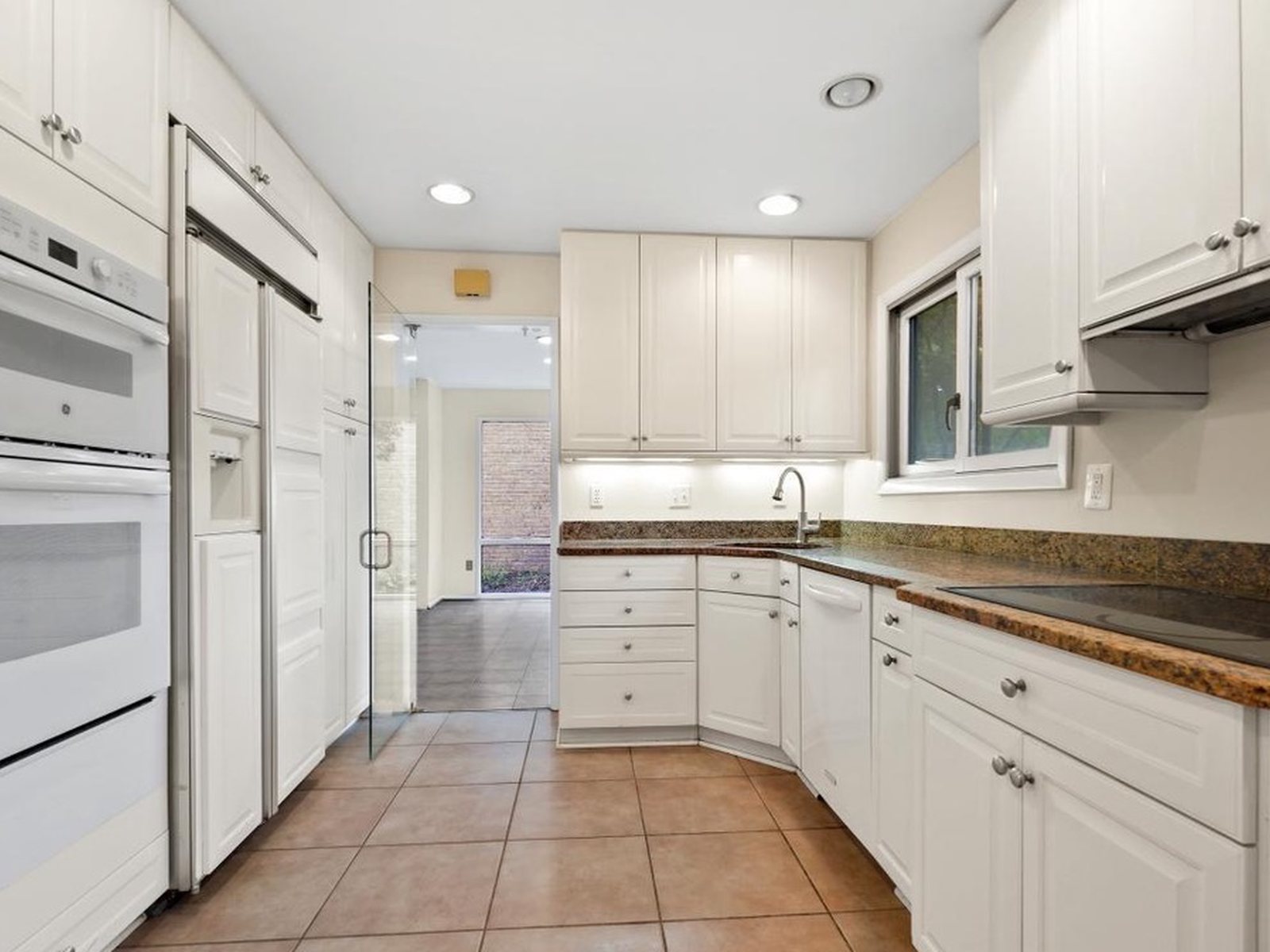
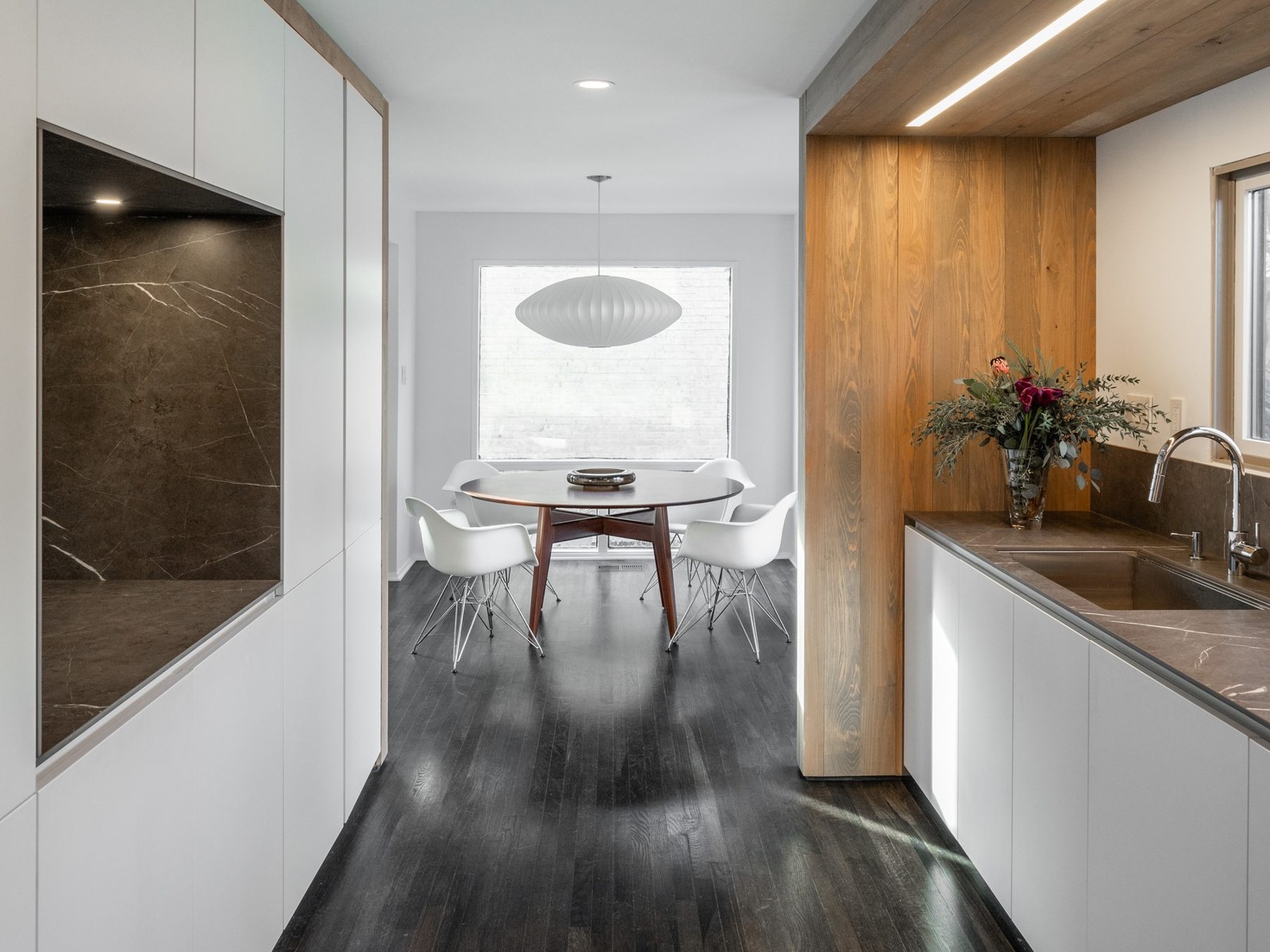
A galley kitchen closed off from everything around it. Now it runs to the dining room at one end and the den at the other.
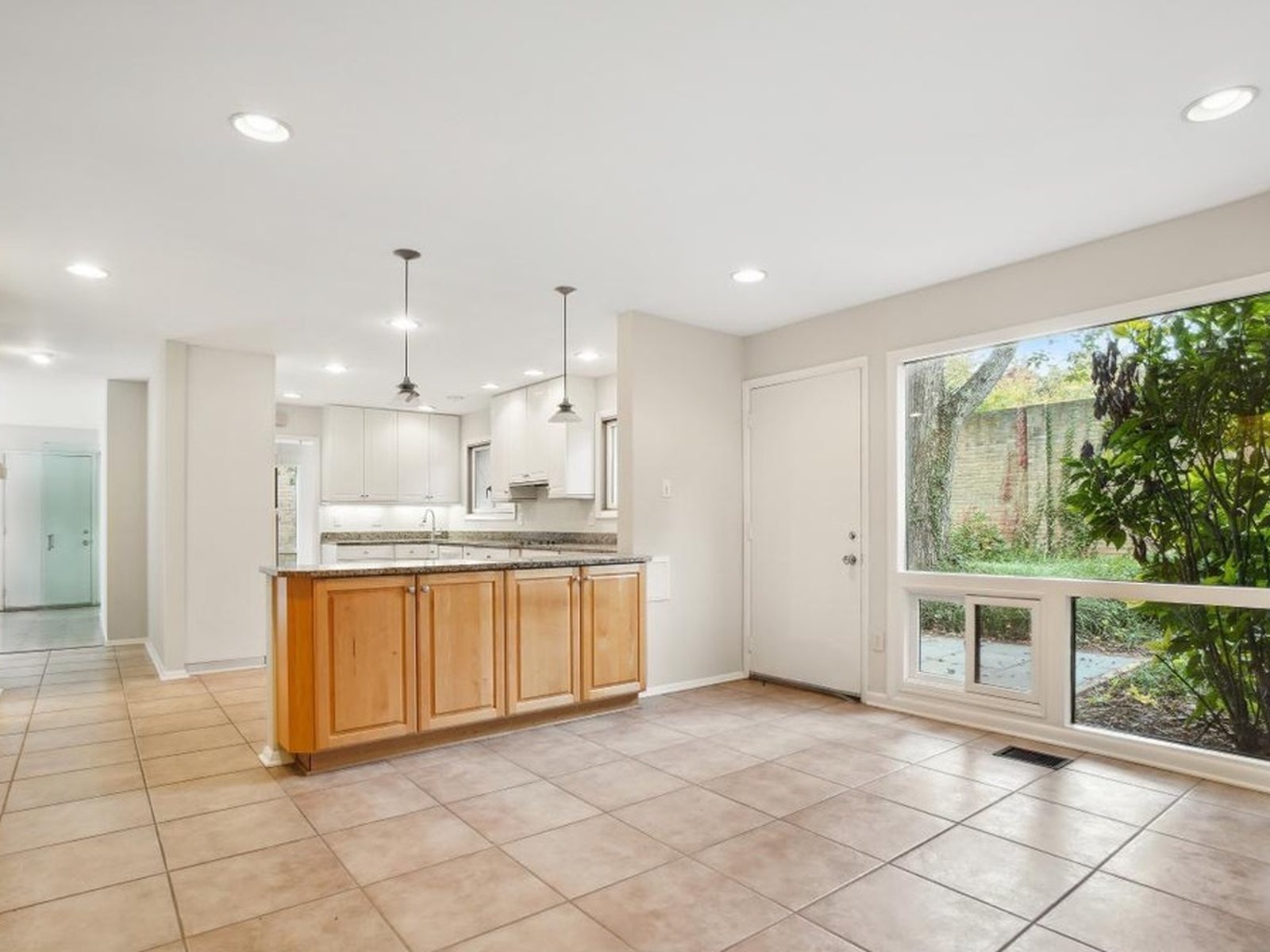
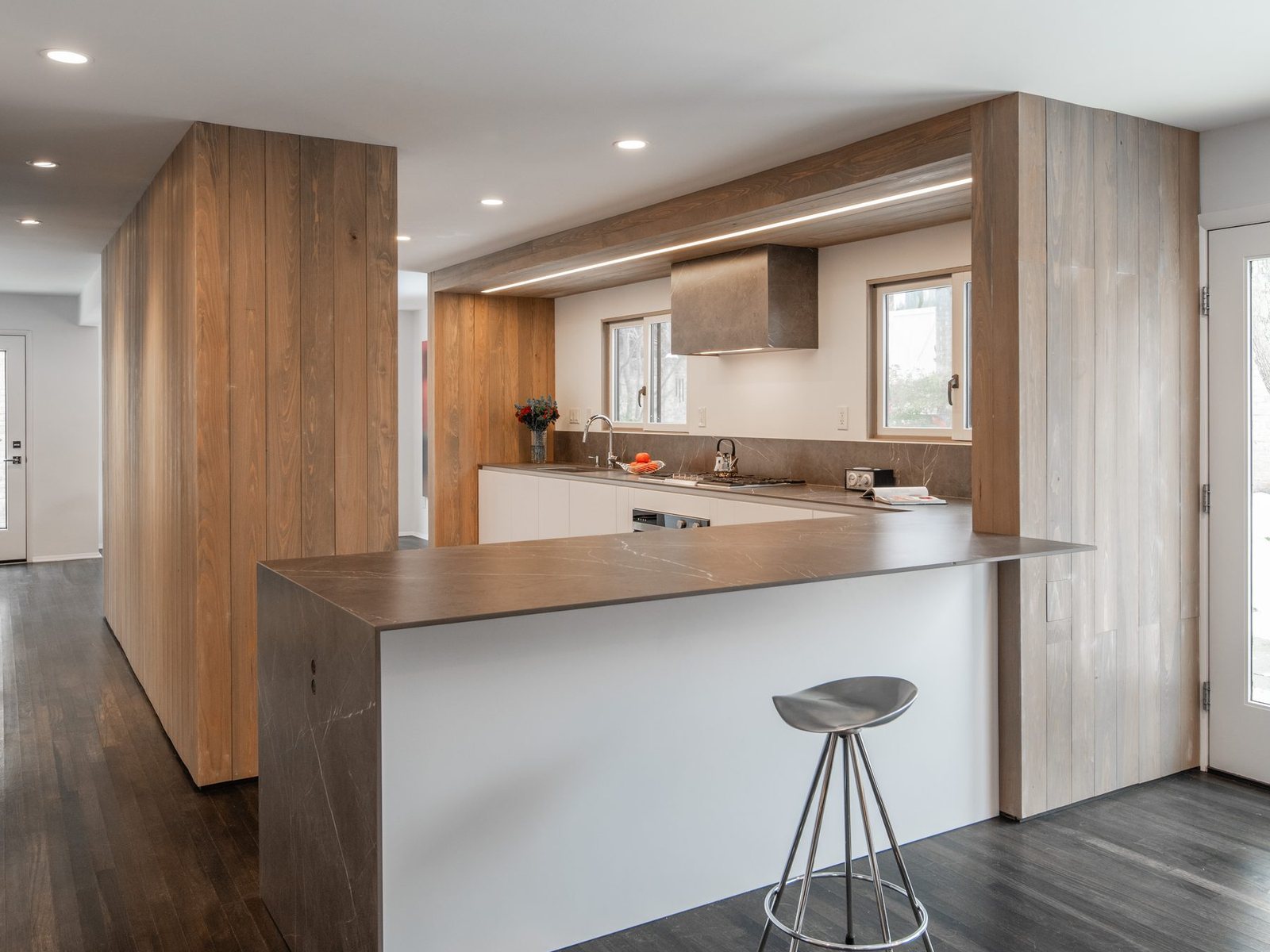
The peninsula, and the wall of cabinets with nowhere to sit, closed off the den. Now the counter drops and the view carries through to the garden.
"The house already knew what it wanted to be. Most of the work was taking away the things that disagreed."
Luis Boza · On editing rather than adding
Is the house good and the plan wrong?
The instinct is always to add. Most houses get better when something comes out instead.
Read why removing beats adding →Rather talk it through? Start with one question.