Walk almost any older block in Washington and you are reading a document, even if no one ever taught you the language. The bay window, the cornice, the raised stoop, the party wall: each one is an answer to a problem of light, density, and law that builders solved more than a century ago. The rowhouse looks the way it does for reasons, and once you can see them, the street never looks generic again.
Why the bay window exists
The projecting bay is not decoration. On a deep, narrow lot pressed between two neighbors, light and air can only enter from the front and back. The bay turns a flat facade into something that reaches sideways for the morning and evening sun, and gives the front room a wider field of view down the street. It is a daylighting device dressed as ornament, repeated thousands of times because it worked.
When I walk a client down their own block, I point out the bays and cornices they have passed a thousand times without seeing. Once you understand why those forms are there, the street reads as a record of how people chose to live, and a house stops being a style and becomes a decision.
The line along the sky
That heavy bracketed cornice running along the roofline does quiet work. It caps the wall against weather, throws a shadow that gives the facade depth, and ties a row of individually built houses into a single street wall. It is why a block of rowhouses reads as a continuous architectural idea rather than a set of strangers standing shoulder to shoulder. The cornice is the city agreeing with itself.
The rowhouse is a record of how a city chose to live.
Law shapes the form
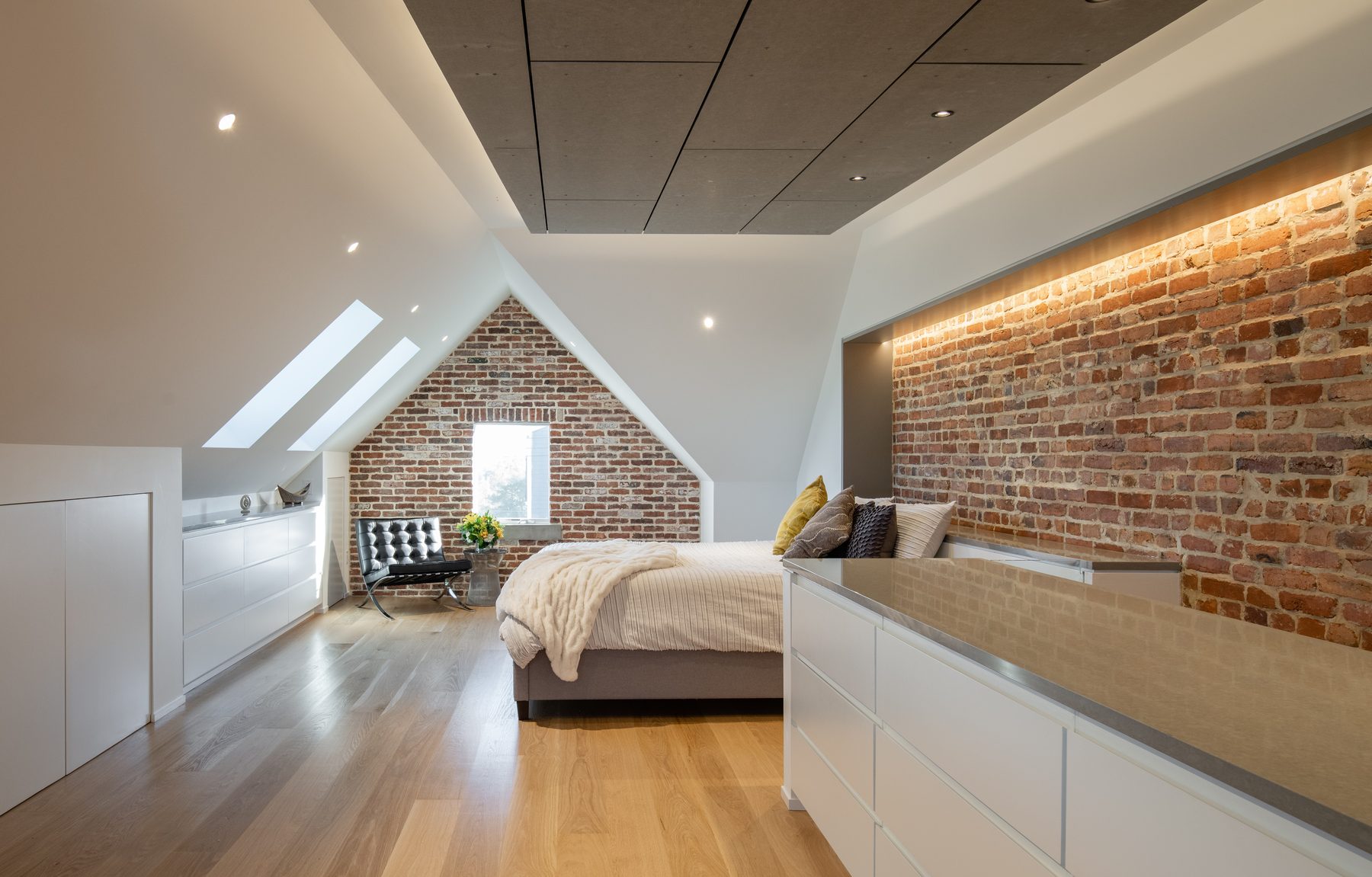
Form did not come only from taste. Building height, lot coverage, and the position of the front wall were shaped by regulation as much as fashion, and they still are. More recently the city limited how tall a rowhouse can grow and how many units it can hold, the rules that curbed the so-called pop-up. The lesson for anyone changing an old house is simple: the original form already absorbed a set of constraints intelligently. The best additions learn from that logic rather than fight it.
This is the most useful thing a homeowner can carry: your house is not an accident, and neither is your block. Understanding why it looks the way it does is the first step toward changing it well.