The owners had a 1940s Cape Cod in South Arlington, a daughter in middle school, and a kitchen with almost no counter space. The living room, dining room and kitchen were three separate compartments, and none of them worked with the others. Out front, a steep slope from the sidewalk and a long run of steps to negotiate it.
They loved the street. They had started looking at larger houses in other neighborhoods.
That is the ordinary version of a decision most owners face once. It is usually framed as a question about the house. It is almost always a question about everything around it.
You already paid for the neighborhood
Whatever you paid for your house, some of it was not for the house. Economist Sandra Black established the cleanest way to measure this by comparing homes on opposite sides of a school attendance boundary, houses in the same neighborhood, on the same streets, differing only in which elementary school the children attend. She found buyers pay about 2.5 percent more for a 5 percent increase in test scores.
That premium is already in your basement. Move to buy a comparable school somewhere else and you pay it a second time, on a larger number.
The more house you are moving to, the larger the share that buys nothing at all. That is not a renovation budget item. It is a renovation.
The trade nobody wins
The standard economic assumption is that a longer commute is compensated, either by a better job or a cheaper house. Stutzer and Frey tested that directly against panel data and found it does not hold. People with longer commutes report systematically lower wellbeing, and the compensation never arrives. Employed people who spend an hour each way report lower job satisfaction, not higher.
They named it the commuting paradox. Its practical form is that the extra bedroom is thirty-five minutes away in each direction, and nothing about the extra bedroom gives that time back.
Moving costs more than most owners budget
Selling is not free and it is not small. Seller closing costs before commission run about 2 to 3.5 percent in Arlington and Northern Virginia, and about 3 to 4.5 percent in Montgomery County, where the county transfer tax and a tiered recordation tax both apply. Add agent commission, typically 5 to 6 percent, and the total lands near 7 to 9.5 percent in Virginia and 8 to 10.5 percent in Maryland.
On a house around $620,000 that is roughly $43,000 to $59,000 in Arlington and $50,000 to $65,000 in Bethesda. At a million dollars it is closer to $70,000 to $95,000 in Arlington, and $90,000 to $110,000 in Bethesda, because Montgomery County's recordation tax is tiered and the top bracket begins right at a million. Virginia's rate is flat, so the percentage holds. Maryland's climbs.
Gone at the closing table, before a single wall moves in the new place. Rates change and yours will differ, so check them rather than assume.
What the money bought instead
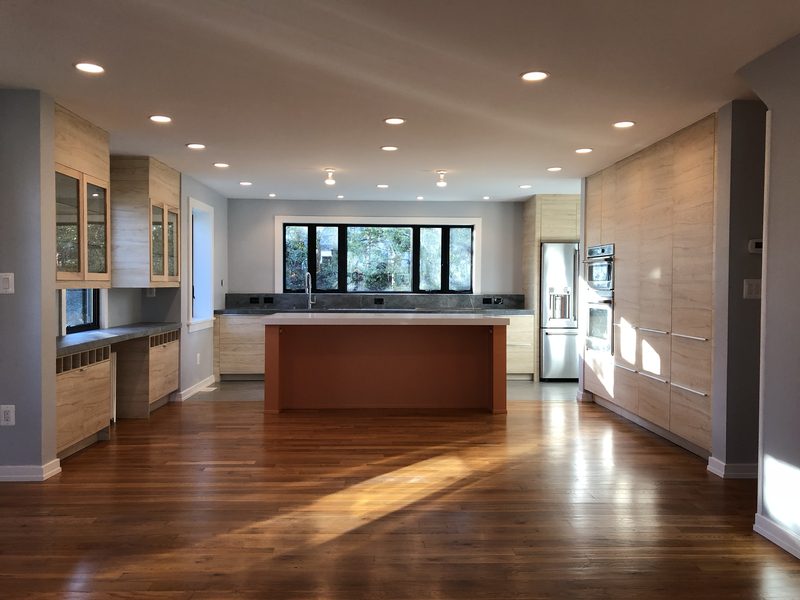
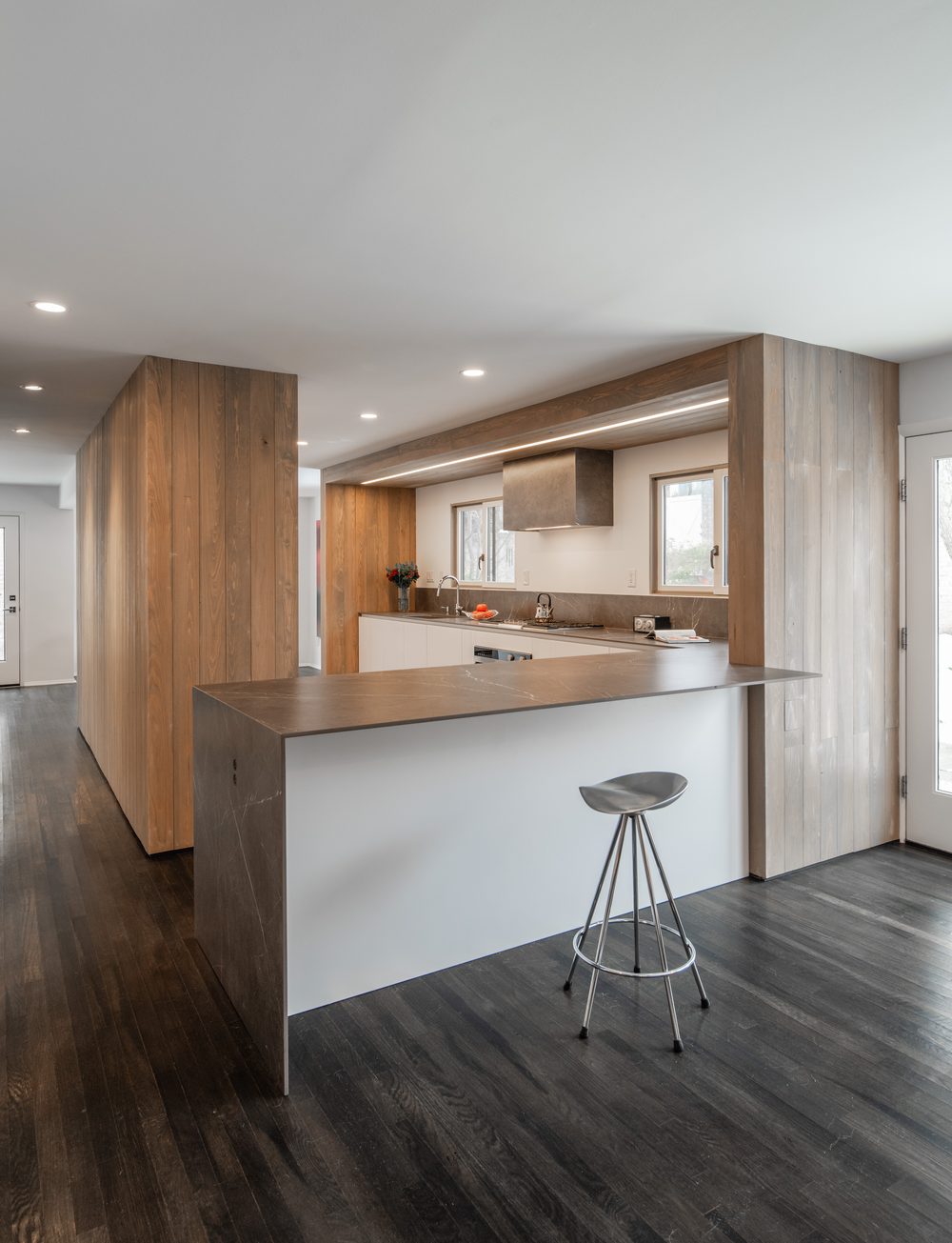
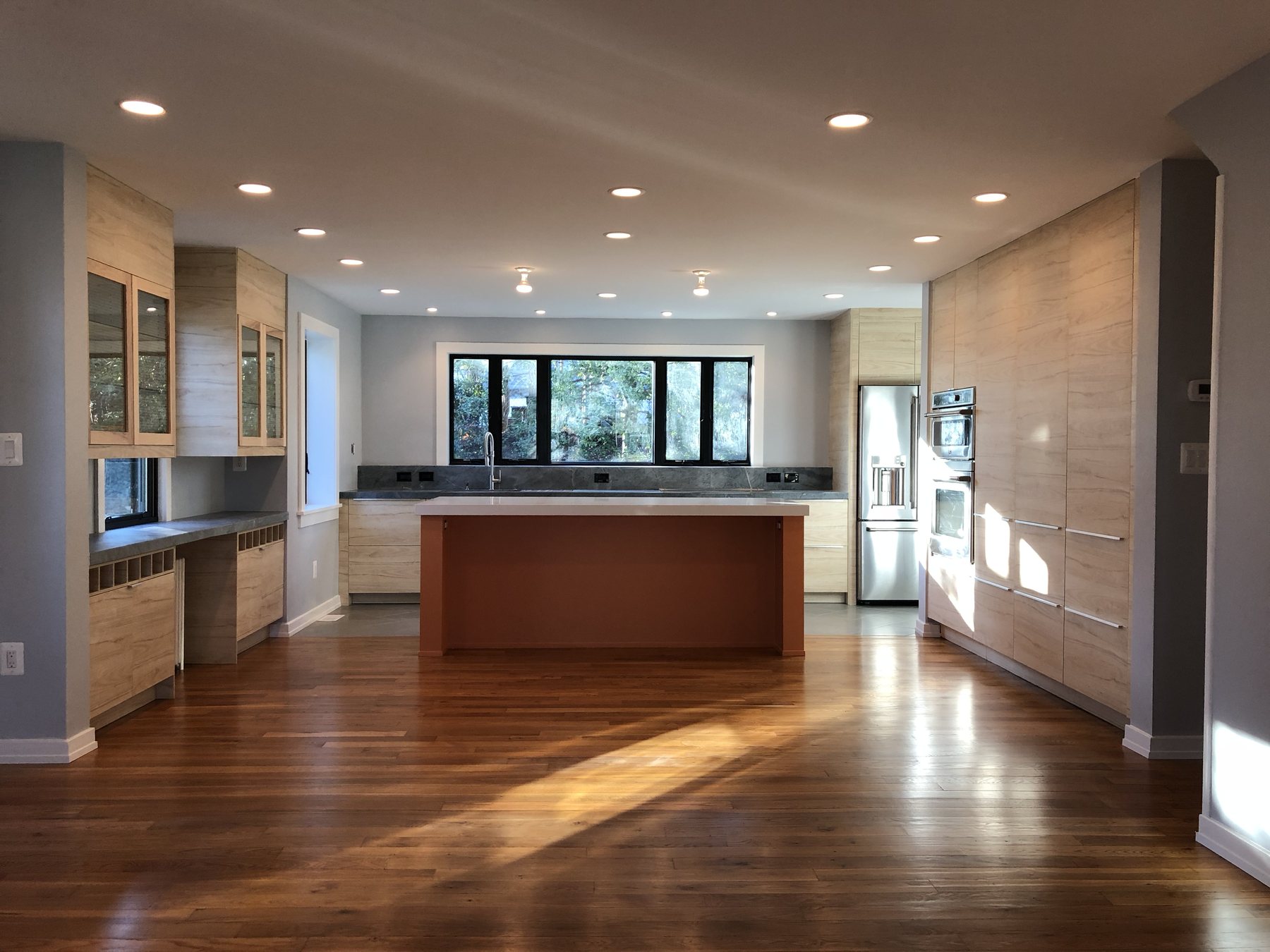
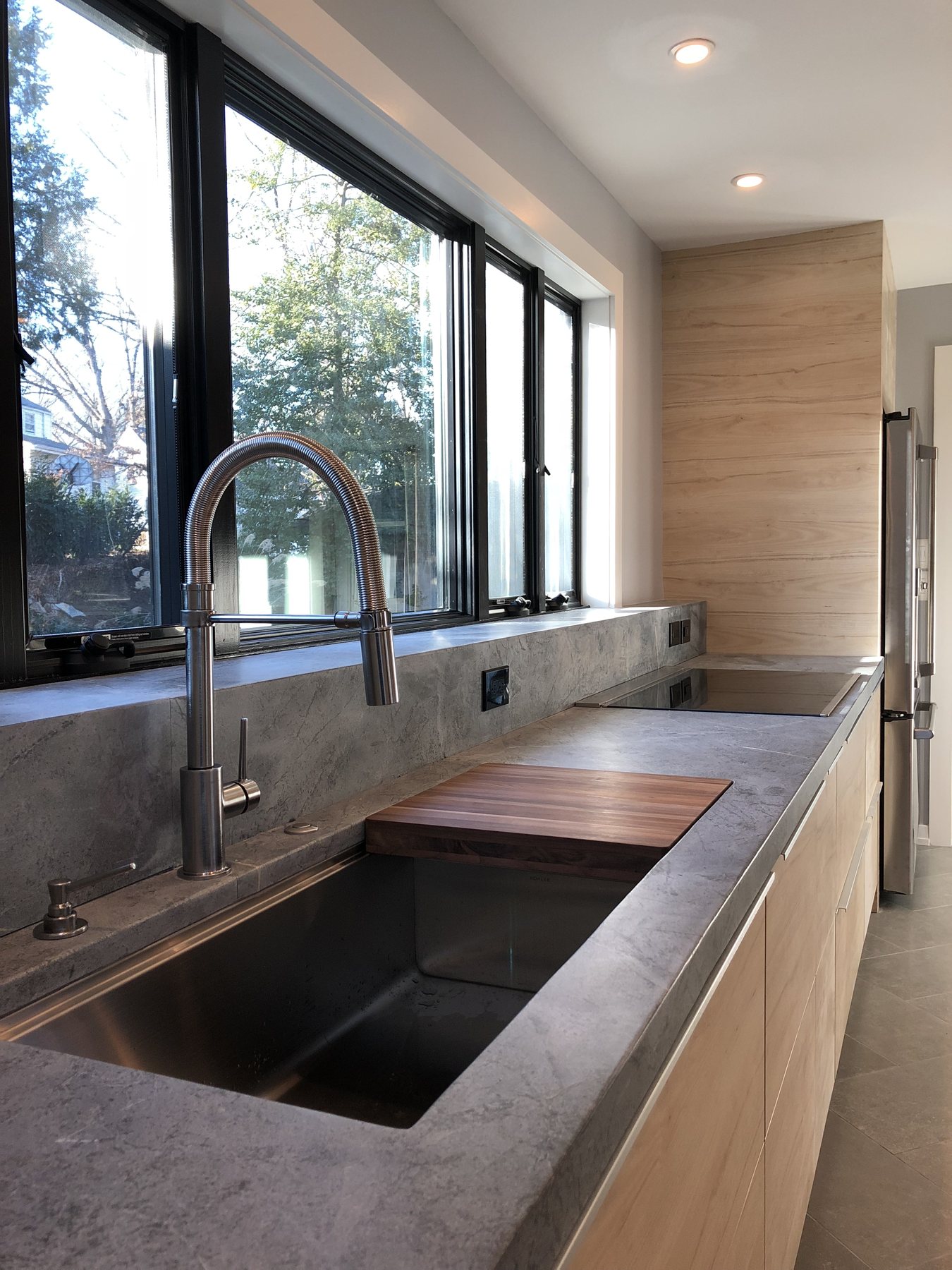
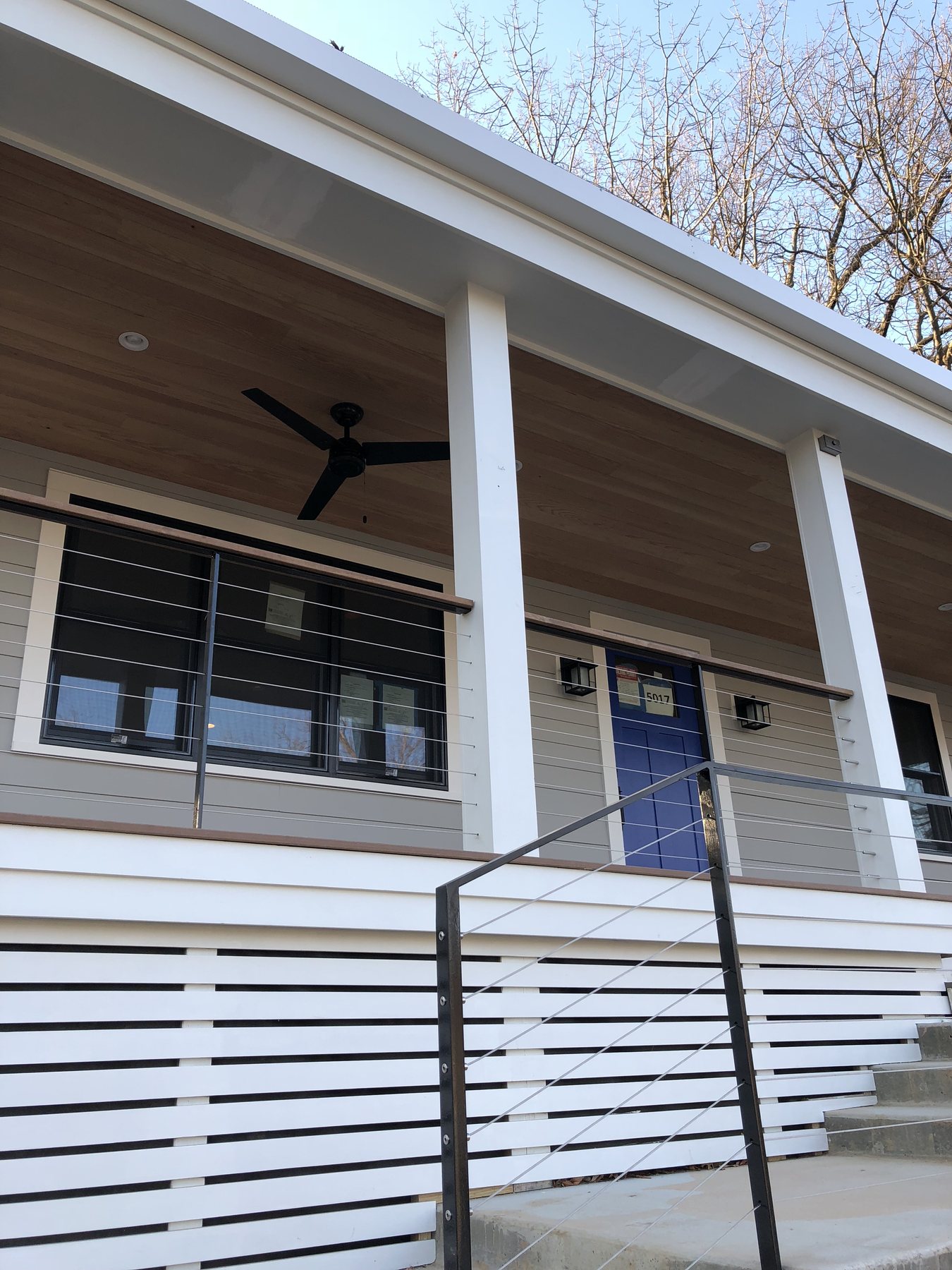
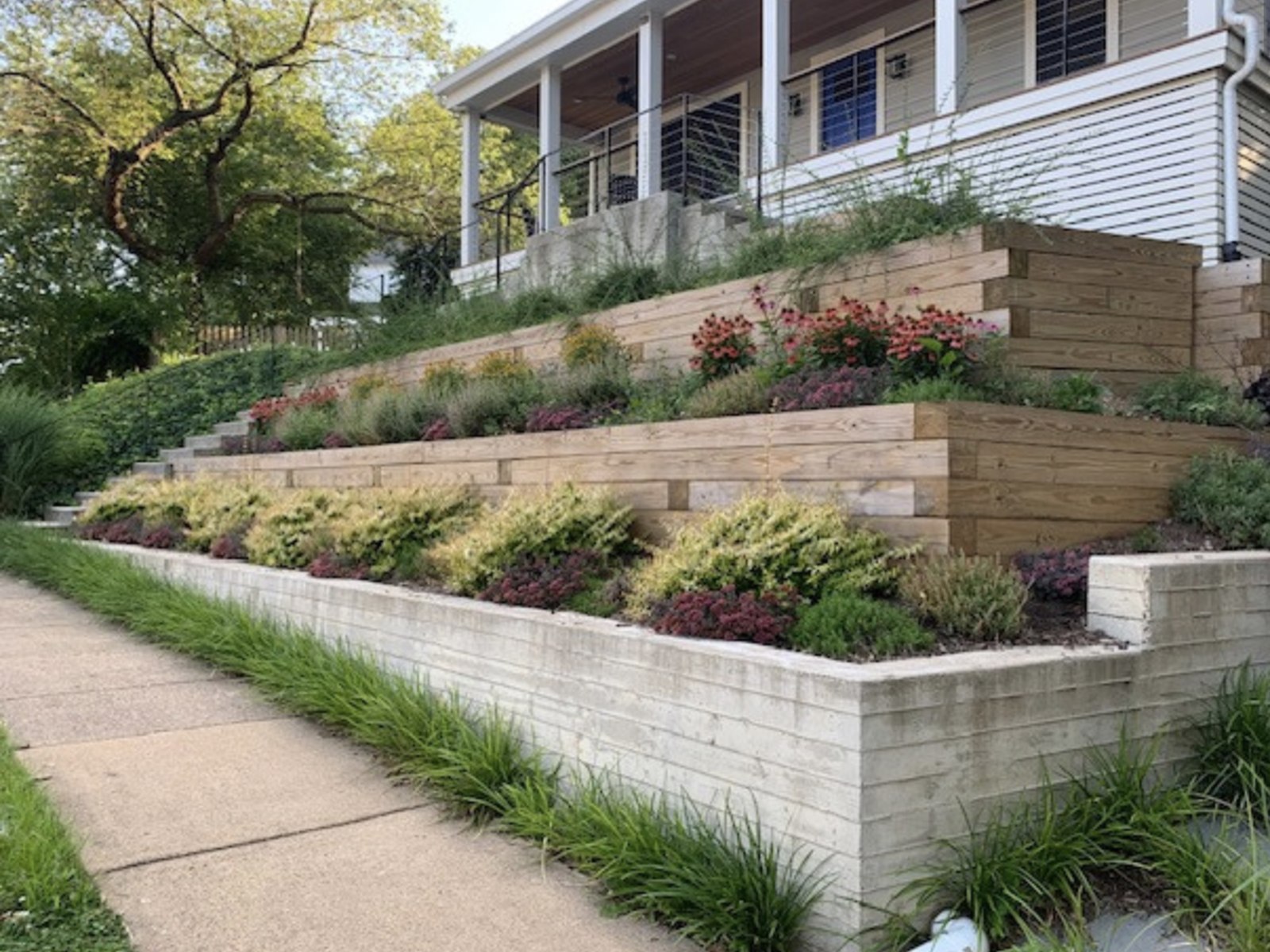
The three compartments became one long room. An existing sunroom at the back was rebuilt so the kitchen could push past the old edge, and a long window above the sink opened the whole room to the rear yard. Out front, foundation stabilization and a board-formed retaining wall reduced the slope, and new stairs made the climb reasonable.
The variance allowed a covered porch running the full width of the house. It turned out to be two outdoor rooms flanking the door. Couches on one side, a hammock on the other. Unenclosed square footage they use half the year, and nobody asked for it.
They stayed on the street they loved. The daughter stayed at her school. Nobody drove any further to work.